Welcome to
Chemical Collective

Are you 18 or older?

Please confirm that your are 18 years of age or older.

You are not allowed to access the page.

info-icon €100 for domestic (NL, CZ, DE) €125 for the rest of the EU, excluding stealth shipping

Free shipping over €50 & free tracked shipping over €100

Friendly customer service available 9-5pm Monday to Friday

Free shipping over €50 & free tracked shipping over €100

Friendly customer service available 9-5pm Monday to Friday

Your cart is empty

The Difficulty of Sincerity After Psychedelics

annabelle-abraham

By Annabelle Abraham

shutterstock 1723713331
in this article
  • Put Your Money Where Your Mouth Is
  • Exposing Your Inner World
  • Masters of Authenticity
  • Practice Makes Perfect
annabelle-abraham

By Annabelle Abraham

Disclaimer: The views and opinions expressed in this article are those of the authors and do not necessarily reflect the official policy or position of Chemical Collective or any associated parties.

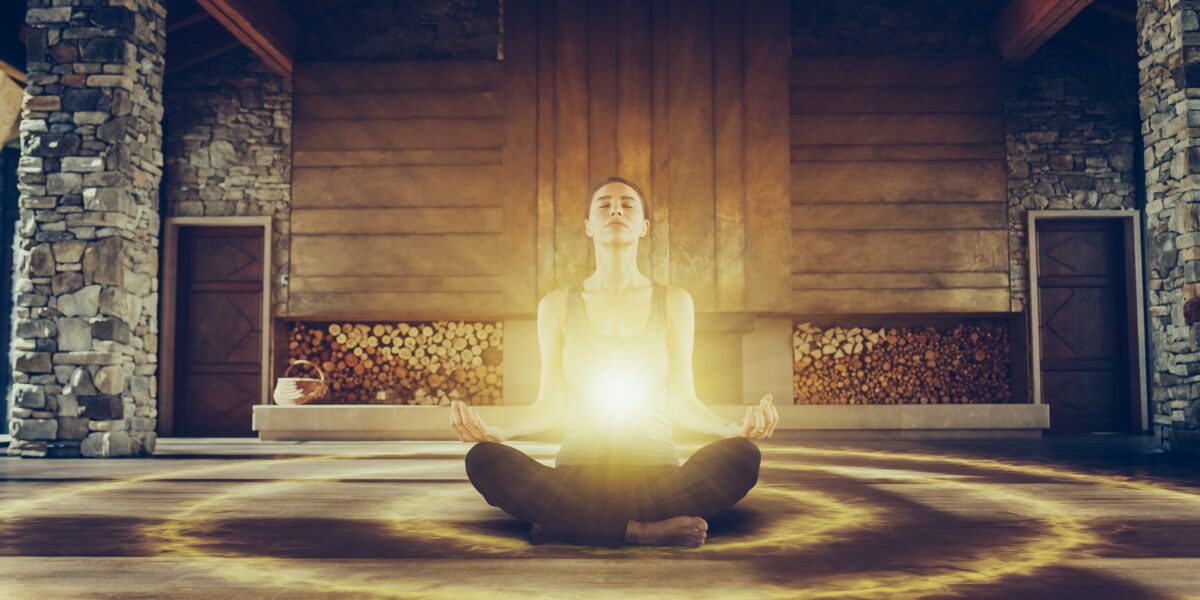
When it comes to sincerity, the gap between the psychedelic altered state and our daily reality is a difficult one to bridge. Paradoxically, experiencing heightened sincerity may lead to post-trip difficulties in the social realm, sometimes even within one’s closest circles. To understand this phenomenon and how it could be approached, let us begin by examining the various ways in which authenticity can emerge as an essential part of the trip.   

Looking at psychedelic experiences through an authenticity lens may reveal it to be one of their most dominant features. It begins with the fact that most people experience the psychedelic altered state as more authentic, more ‘real’ than ordinary life. As Aldous Huxley writes in The Doors of Perception

‘This is how one ought to see,’ I kept saying as I looked down at my trousers, or glanced at the jeweled books in the shelves, at the legs of my infinitely more than Van-Goghian chair. ‘This is how one ought to see, how things really are.’

In addition to this general sense of perceiving more authentically, sincerity may be experienced in specific ways, personally and socially. For many, it feels easier to communicate sincerely in an altered state: telling someone that you love them, expressing gratitude and regret, talking about difficult emotions, or being true to your needs and wishes of the moment. On the personal level, sincerity becomes deeper as a result of seeing your own reflection clearly. Psychedelics can expose the masks and defences we use regularly and help us see how insincere we usually are. This mirroring effect can happen on different scales, reflecting inauthenticity in the society we live in, our culture, or the entire human race. 

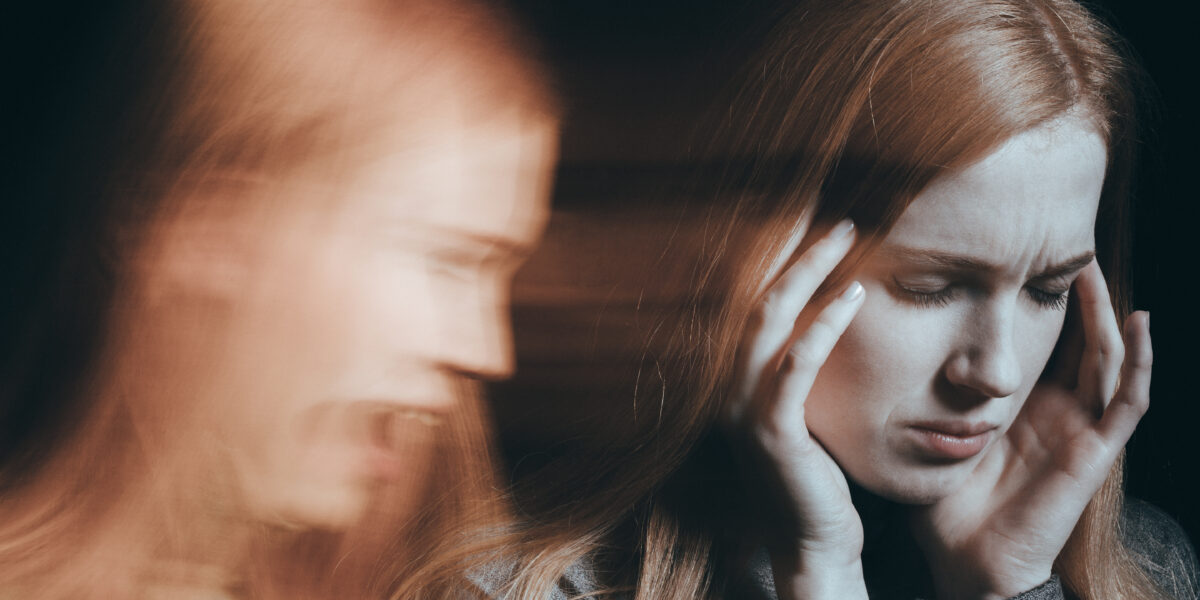
After experiencing authenticity at this level, everyday interactions can feel staged or thin. Mundane conversations at work, at the gym, and even at social events may suddenly feel like meaningless small talk. You run into an acquaintance who asks you how you are doing. You know they don’t really care, and you reply, “Good, and you?” even though you are having a very bad day. At work, you may realise you have never had a real conversation with your colleagues. You become more aware of the distance between people and how inauthenticity is an accepted and sometimes required part of our lives. Such daily experiences, which weren’t a big deal beforehand, may start to feel heavier to handle.

Put Your Money Where Your Mouth Is

When we talk about authentic expression, we often relate to how and what people say, but behaviour is at least as important – and socially regulated – as words. Certain events carry highly specific codes with them. The obvious examples are ceremonies, like weddings and religious sermons, but we can also think of covert examples, like first dates. Much of what happens is regulated rather than expressed authentically, from the questions we ask to the location we choose, who is paying, and how the date ends. The stricter the social codes, the less authentic the environment may feel.  

I once travelled to France for a funeral of my friend’s father. Not knowing how the ceremony would unfold, I followed the lead of the locals. At the end, people walked past the coffin and shook the hands of each family member. When my turn arrived, and I stood in front of my friend, shaking his hand felt so inauthentic that my entire body revolted against it. What I really felt like doing was to give him a hug. At the same time, I didn’t want to seem disrespectful to any other members of the family or people in the room. The situation did not offer much time to reflect or ask if a hug would be appropriate, either. I took my chances and went along with my sincere reaction. My friend clearly appreciated it, but he was not the only one. That hug opened a door for other people, widening the ceremonial possibilities. The last guests in line were colleagues of his father from Finland. When their turn arrived, they stood in front of the family and bowed deeply. To them, neither a handshake nor a hug felt authentic.

Such differences are easily accepted in a foreign environment. We don’t think of them in terms of sincerity, but as different education, customs, sometimes a different ‘nature’, like when we talk about ‘cold’ and ‘warm’ people. Experiencing your own culture, the one you call “home”, your friends, or your family as insincere hits you on a different level. If you aren’t a foreigner, people get hurt faster when your behaviour doesn’t comply, and mundane situations turn into awkward moments. Experiencing difficulties being sincere and comfortable at the same time can get very frustrating, and in the long run, discomfort, fear, and frustration may close you up again, in an attempt to protect yourself. 

Exposing Your Inner World

Sincerity can be defined as an alignment between inner and outer worlds, that is to say, between our thoughts, beliefs, feelings, desires, words, and deeds. If we think about it this way, the feeling of sincerity during psychedelic experiences may be a result of the blurring between ‘inner’ and ‘outer’, self and other. In daily reality, we constantly move between rigid outer worlds and are expected to adjust to their rules, regardless of our inner experience. In effect, we are expected to hide our inner world most of the time.

I remember a conversation with a young woman from Colombia, who was currently living in England. She was telling how she started to cry one day at the library, shortly after arriving in the UK. Someone noticed her crying and came over to ask if she was alright. “Yes, I’m ok, thanks”, she said, wondering why the woman had approached her. She kept reading and tearing, and a few minutes later, another person asked if she needed help. 

“Where I come from”, she explained, “it is normal to cry in public, even men do it.” 

“So if you feel like crying, you just do, anywhere?!” I was utterly surprised by this permission to express one’s emotions.

“Yes, at the library, on the street, it doesn’t matter. And nobody would approach you to ask about it, because it’s a normal thing to do, it happens.” 

A young man from Finland, who was listening to our conversation quietly until now, started laughing and said, “In my country, nobody would approach you either, not because it’s normal to cry in public, but because people would find it so weird and embarrassing that they would turn away, not knowing what to do!” 

This little story demonstrates how different societies regulate emotional expression, sketching the borders of how much of your inner state you may share in public. There is an infinite number of social codes that rule how we conduct ourselves and how we communicate with others. In fact, each environment has its own codes: your work environment, your friends group, your family. To abide by all of them, you need to be a bit of a different person at work and at a work-related social gathering, in bed and on a public bus, in church and at a psychedelic festival. 

Masters of Authenticity

If you spend time around young children regularly, you may notice the variety of ways in which authenticity collides with social norms. When kids find something peculiar, they go ahead and ask about it, whether it is your religious attire, unique hair colour, or visible handicap. You could describe it as naivete and be done with it, but in fact, we have a lot to learn from children about honesty. 
As we grow up, we push sincerity to the back for other priorities, like not offending other people’s feelings and keeping the peace in a heterogeneous society. Making a good impression also becomes more important than being sincere. We adopt a certain language, try to be polite, show interest in certain things and people, and dress in a certain way. We learn to hide our inner world from others and eventually from ourselves. Judgement and shame work together here. If you are judgmental about your inner experience, for example, your feelings or desires, shame will prevent you from exposing them. If you are judgemental about someone else’s, you may refrain from being authentic with them. Expressing yourself genuinely may earn you all kinds of negative labels. People may consider you too opinionated, rude or a troublemaker, but also weak, naive or emotional, depending on where and who you are. Children are far less judgemental and more curious about things, which is why only a child could say sincerely that “the Emperor has nothing at all on!” in Hans Christian Andersen’s “The Emperor’s New Clothes”.

Practice Makes Perfect

Staying sincere across various situations is a skill that requires practice. It may be easier to start with trusted relationships, where you can share your frustration with the authenticity gap, and experiment with sincere communication. It can be with a partner, a close family member, or your best friend. Expanding further means finding people, situations and environments that promote sincerity, where social expectations are less rigid, and there is more acceptance of variety.

Islands of authenticity can be found in many places. I sometimes go to a dance class that begins with a short sharing circle of how you feel at this moment, how you arrive. Each person can choose how deep or personal they want to go in this emotional check-in, but I have noticed that the practice creates more sincerity even for those who feel less comfortable sharing. The focus on the moment, the fact that everyone is in a circle, that you can express something without dwelling on it, and the variety of personal sharings work together so that each individual can express their own thing. If someone doesn’t feel like sharing at all, that very fact is expressed in a sincere way, which can sometimes be more intimate than sharing something concrete. 

“The underground”, in its broadest interpretation, is home to many cultures offering deeper authenticity. Psychedelic festivals, artist groups, hippies, and Burning Man are but examples of such “tribes”, each with its own style. They all vary in how sincerity is expressed, for example, if it is very emotional or rather humorous, implied, or direct. Each tribe has its limitations: certain subjects may be sensitive or even taboo, and the rules determining which subjects are off limits and how much is “your business” remain unspoken most of the time. Finding your tribe – where you feel most comfortable to express yourself – does not mean that your inner and outer worlds become harmoniously united. You may still experience conflict. What is perhaps more important is that sincere circles allow you to openly converse about that very conflict, and sometimes to change the rules. 

Annabelle Abraham | Community Blogger at Chemical Collective

Annabelle is one of our community bloggers here at Chemical Collective. If you’re interested in joining our blogging team and getting paid to write about subjects you’re passionate about, please reach out to Sam via email at samwoolfe@gmail.com

share your toughts

Join the Conversation.

0 Comments
Inline Feedbacks
View all comments

Related articles

Our Products

Related Products

1V-LSD 150mcg Blotters
1V-LSD 150mcg Blotters From 22.00
(147)
1cP-LSD 100mcg Blotters
1cP-LSD 100mcg Blotters From 18.00
(138)
Tryptamine Mix and Match Pack (4 x 0.1g)
Tryptamine Mix and Match Pack (4 x 0.1g) 65.00
(1)
1V-LSD 10mcg Micro Pellets
1V-LSD 10mcg Micro Pellets From 15.00
(45)
1V-LSD 225mcg Art Design Blotters
1V-LSD 225mcg Art Design Blotters From 35.00
(64)
1S-LSD 150mcg Blotters
1S-LSD 150mcg Blotters From 29.00
(20)
1V-LSD 225mcg Pellets
1V-LSD 225mcg Pellets From 35.00
(26)
1cP-LSD 10mcg Micro Pellets
1cP-LSD 10mcg Micro Pellets From 15.00
(23)
1D-LSD 225mcg Pellets (1T-LSD)
1D-LSD 225mcg Pellets (1T-LSD) From 42.00
(13)
5-MeO-DMT Freebase
5-MeO-DMT Freebase From 23.95
(36)
O-PCE HCL
O-PCE HCL From 17.50
(25)
1cP-LSD 20mcg Micro Blotters
1cP-LSD 20mcg Micro Blotters From 18.00
(29)
4-HO-MET Powder
4-HO-MET Powder From 19.50
(27)
1cP-LSD 150mcg Pellets
1cP-LSD 150mcg Pellets From 25.00
(13)
4-AcO-MET Fumarate
4-AcO-MET Fumarate From 19.50
(12)
rewards-icon
popup-logo

Reward program

popup-close
  • Earn
  • Affiliates