in this article
- Donald Trump and the Psychedelic Renaissance
- Psychedelic Science at the University of Cambridge
- New Zealand and Australia - Psychedelics for Palliative Care
- Psychedelics’ Neural Fingerprint
- MAPS Celebrates its 40th Anniversary
Are you 18 or older?
Please confirm that your are 18 years of age or older.
You are not allowed to access the page.
Disclaimer: The views and opinions expressed in this article are those of the authors and do not necessarily reflect the official policy or position of the Chemical Collective or any associated parties.
April 2026 has been a landmark month for psychedelic medicine. The most significant development was US President Donald Trump signing an executive order to accelerate research and expand patient access to psychedelic therapies, fast-tracking FDA review of psilocybin, MDMA, and ibogaine for conditions including depression, PTSD, and opioid withdrawal. Meanwhile, the Cambridge Psychedelic Research Group continued building momentum with multiple active clinical trials, and a major international study identified a shared neural fingerprint across five psychedelic substances, marking the largest brain imaging study of its kind to date.
However, progress has been accompanied by serious concerns. Indigenous leaders have criticised Trump’s order as “biopiracy”, warning that communities who have long held these medicines sacred risk being left behind as commercial interests take over. MAPS, celebrating its 40th anniversary, echoed these worries, with founders cautioning that legal access is not the same as equitable access, and that the therapeutic integrity of these treatments risks being stripped away in pursuit of profit. As the field accelerates, the central challenge is ensuring that the benefits are shared fairly and that healing – not commerce – remains the driving purpose.
April has been a pretty astounding month for the psychedelic industry as a whole, with perhaps the most significant development being US President Donald Trump’s declaration: “Can I have some, please?” in relation to ibogaine. On the same weekend as psychonauts the world over celebrate Albert Hoffman’s “Bicycle Day” (in commemoration of the world’s first recorded LSD trip in 1943), Trump signed a landmark executive order, with the controversial podcaster Joe Rogan and Health Secretary, Robert F. Kennedy Jr, standing behind him, both strong proponents of ibogaine therapy. Trump approved the acceleration of psychedelic research to increase patient access to these new treatments.
As a result, the US Food and Drug Administration (FDA) will now begin to fast-track the review and approval process for three psychedelic-assisted therapy candidates, which have already received “breakthrough therapy designations”. These are:
The order states more broadly that potential psychedelic treatments as a whole will become more widely available.
This sets up some potential conflicts between the FDA and the Drug Enforcement Agency (DEA), which has previously stated that “schedule I compounds are ineligible for right to try”.
The order instructs the Department of Health and Human Services (HHS) to push at least 50 million dollars to states which have already, or are in the process of developing, programmes to study psychedelic drugs as a means to tackle serious mental illness.
It is a huge step towards easing restrictions on research, and one which “most people didn’t have…on their bingo cards” for the Trump administration. However, while on the surface this may seem universally positive, there are worries that the Indigenous communities which have guarded substances like ibogaine and psilocybin will not be fairly compensated.
The psychedelic industry is increasingly defined by who controls the direction of travel, and while this is a positive step forward, we cannot forget the profit incentive.
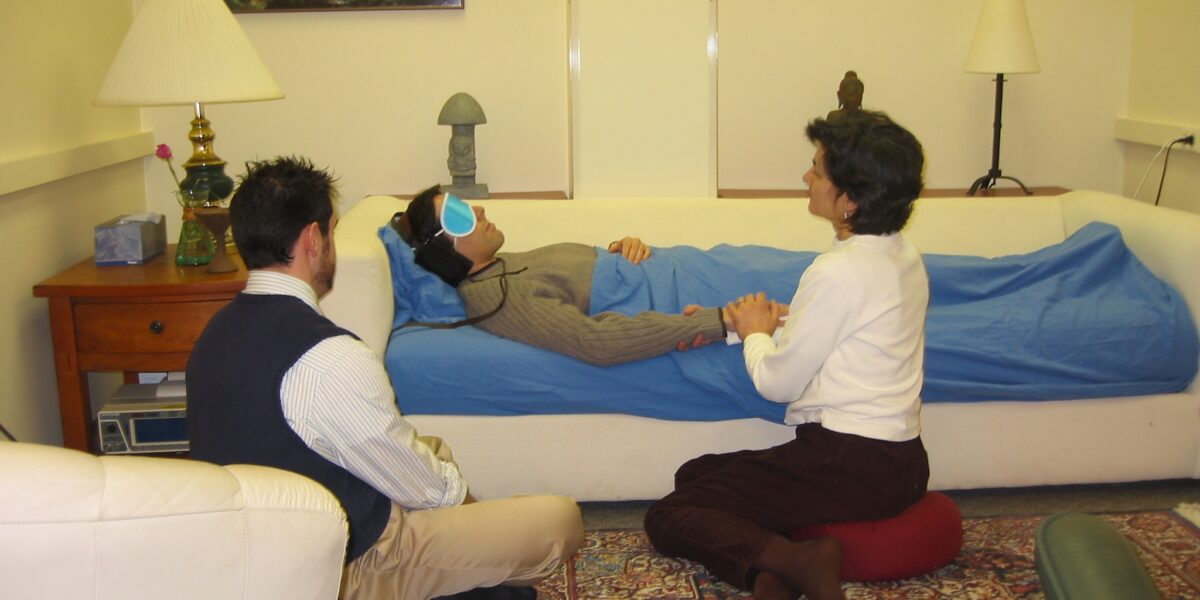
Though Cambridge University is one of the UK’s leading research universities, it has thus far been uninvolved in the landscape of psychedelic research. However, that changed when Cambridge was granted its Home Office license and established the Cambridge Psychedelic Research Group (CPRG). This officially launched in March 2025. At the time, consultant psychiatrist and principal investigator, Dr Liliana Galindo, stated that Cambridge was “late joining the psychedelic renaissance”, having spent several years navigating various obstacles which “took a long time”.
One year on the CPRG is now heavily involved in several potentially groundbreaking clinical trials. It is also a part of multiple real-world studies and a key builder of the infrastructure needed to offer psychedelic therapies on the National Health Service (NHS).
The CPRG is a partnership between the University of Cambridge, Cambridgeshire and Peterborough NHS Foundation Trust (CPFT), and Cambridge University Hospitals NHS Foundation Trust (CUH). There is a strong emphasis on interdisciplinary collaboration, drawing on expertise from the departments of psychiatry, psychology, and pharmacology. Each institution has a different role to play:
Many CPRG members hold positions in multiple of these institutions, with communication across departments absolutely key to the initiative’s success.
Currently active trials include:
A recent survey in New Zealand and Australia has found that 88% of the 93 palliative care physicians who responded to the survey support clinical research into psychoactive substances like psilocybin and MDMA. Research is already being undertaken into psychedelics’ effectiveness for the treatment of individuals with terminal cancer, and “is showing positive signs”. Auckland University Associate Professor David Menkes, from Auckland University, told New Zealand publication RNZ that the study has “provided a real strong hint that MDMA can be spectacularly helpful for some individuals who are facing death from cancer”.
Traditional psychiatric treatments often fail to tackle the extreme physical and psychological challenges that terminal patients undergo. While Australia became the first country to formally recognise these substances as medicines in 2023, clinicians in New Zealand are now advocating for local trials as well. Menkes stated in the same interview that advancing research into psychedelics had been limited for far too long by public perception warped by the United States’ drug policy.
This will necessitate considerable regulatory changes to provide a safe, clinical environment in which these therapies could significantly improve patients’ quality of life.
An “international mega-analysis” has identified a unique “cross-drug neural fingerprint of psychedelic states”, a significant advancement for psychedelic neuroscience.
Researchers from around the world have identified a common neural fingerprint which is shared across five major psychedelic substances:
The study combined brain imaging data from more than 500 brain scans from 267 people across 5 countries. It is believed to be “the largest study into psychedelics and the human brain to date”.
While there were differences in the specific mechanisms of action and changes in brain activity, there was a substantial overlap in how the brain regions communicated with one another. Dr Danilo Bzdok, a senior author on the study, from McGill University in Montreal, Canada, stated that:
The usual top-down hierarchy of the brain disappears, which allows for communication between areas of the brain that are usually segregated. Specifically, the researchers saw a strong increase in communication between brain networks involved in higher-level thinking and more primitive networks linked to vision and sensation.
Contrary to some previous claims, psychedelics were not seen to “disintegrate” individual brain networks. Rather, the internal connections within some systems weakened, while communication between different systems surged.
The aim of the study is to “provide a solid foundation” necessary for future psychedelic research in an industry which is growing at an extremely rapid pace.
On the 22nd of April 2026, the Multidisciplinary Association for Psychedelic Studies (MAPS) marked its 40th anniversary. MAPS was founded (in April 1986) to “advance psychedelic research and knowledge”, and has gone on to raise more than $150 million, supported 45 studies, and played a huge role in shaping the global policy and cultural landscape surrounding the medical use of psychedelics.
MAPS was founded by Rick Doblin, Ph.D. in direct response to a federal government decision he disagreed with on both scientific and moral grounds. The Drug Enforcement Agency (DEA) placed MDMA as a Schedule I substance. This overrode a law judge’s recommendation that it remain available in a therapeutic context. This anniversary is a pivotal moment for the field, and a moment to highlight the progress that has been made. Psychedelic medicine has moved into the mainstream (Trump’s new executive order is testament to this), and research and regulatory approval are accelerating worldwide.
However, MAPS leadership has highlighted several potential new threats to its progress:
Current priorities for MAPS include a Phase 2 study of cannabis for veterans with PTSD, couples therapy research, and publishing a publicly available “Investigator’s Brochure for ibogaine”, summarising known clinical and non-clinical data related to the compound.
MAPS continues to advocate for legal reform, including protections for Indigenous communities which have been affected by the burgeoning industry and continued prohibition, and an end to criminal penalties for personal possession and use.
I’ll leave you with a final statement from Rick Doblin, which urges both optimism and caution:
David Blackbourn | Community Blogger at Chemical Collective
David is one of our community bloggers here at Chemical Collective. If you’re interested in joining our blogging team and getting paid to write about subjects you’re passionate about, please reach out to Sam via email at samwoolfe@gmail.com

Welcome to Chemical Collective.
Create an account to earn 200 welcome points.
Already have an account? Sign in
Check out our Community Blog and get involved with the conversation. You will be awarded 50 x ChemCoins for each comment up to a limit of 250 total ChemCoins.
Have you purchased any of our products? Reviews and reports are so important to the community. Share your honest opinion, and we’ll reward you with 50 ChemCoins for each review!
Every time you complete an order with us, you’ll be awarded ChemCoins for each Euro spent.
Welcome to Chemical Collective.
Create an account to earn 200 welcome points.
Already have an account? Sign in
Earn commission every time someone makes a purchase through your link.
When you become an affiliate, you will be allocated a unique link to share with your friends, followers, subscribers, or Aunt Susan.
You can choose to payout the commission earned once per month, or save it up to receive on a rainy day! Commission earned is 5% of the total order value per referral.
Contact us to join the Chemical Collective family and become an affiliate.
share your toughts
Join the Conversation.