Welcome to
Chemical Collective

Are you 18 or older?

Please confirm that your are 18 years of age or older.

You are not allowed to access the page.

info-icon €100 for domestic (NL, CZ, DE) €125 for the rest of the EU, excluding stealth shipping

Free shipping over €50 & free tracked shipping over €100

Friendly customer service available 9-5pm Monday to Friday

Free shipping over €50 & free tracked shipping over €100

Friendly customer service available 9-5pm Monday to Friday

Your cart is empty

Healing Grief with Psychedelics

oli-genn-bash

By Oli Genn-Bash

shutterstock 2612755823 1
in this article
  • Reorganising Grief
  • Why Psychedelics Change the Terrain
  • How Psychedelics Facilitate Reconnection
oli-genn-bash

By Oli Genn-Bash

Disclaimer: The views and opinions expressed in this article are those of the authors and do not necessarily reflect the official policy or position of Chemical Collective or any associated parties.

How can grief be one of the most enduring and universal human experiences, and yet at the same time be so poorly understood? My mother died of cancer in 2000 when I was just 11 years old, and at that age, I just didn’t have the life experience or skills to talk to my siblings, my father, or anyone else in my wider family about this loss. Before she died, my dad spoke to us and said that this period was going to be the final stages of her life. There was no way I could have prepared for this at such a young age, and despite being brought up in a Jewish family, I didn’t really have any conception of a cultural container for grief.

In the Jewish religion, burials happen very quickly, with the idea that burying a body within 24 hours is in accordance with the Torah. This shows respect for both the deceased and the mourners, with the quick burial facilitating the start of the grieving period. Without this process, it is thought that mourners would be stuck in a place of anguish while in the physical presence of the deceased, where they are unable to simultaneously plan a funeral and mourn their loved ones. 

This experience was quite intense, as the hours that followed my mother’s death were filled with an energy of utter devastation and loss, combined with action and lots of family members around just getting involved. I remember being sat on the floor of my bedroom just not knowing what to do – my grandmother came to find me, and it’s the one time I remember her getting down on the floor (probably in her 80s if not her late 70s) to sit with me. The week that follows the funeral is a period of mourning known as “shiva”, which is an observance period for the parents, siblings, children, or spouses of the deceased. 

After this period, however, there was a real sense that everyone in our family would be dealing with grief in their own way. There was a certain sense of discomfort and no real communication or shared sense of grief – this seemed OK and normal, and there was an acceptance that talking about death is scary. It seems that the West in general has a difficult time talking about this topic, with death denial being a prevalent feature of our culture, where we tend to say people “pass away” rather than simply saying they die. 

I remember a period at school shortly after my mother died where our Religious Studies class was actually focusing on the topic of death, but I decided to sit out during these sessions, feeling that I was too sensitive. Perhaps I was right, but on reflection (especially since my experiences with psychedelics), I wonder if perhaps sitting through those sessions could have potentially been a positive thing, but at such a young age, it was probably impossible to have this kind of perspective. 

The limits of conventional approaches to dealing with grief, such as talk therapy, seemed to be quite clear to me as a teenager, where I encountered a lot of resistance to talking about my mum’s death, and essentially gave up on the idea of therapy at this point in my life. Time-based narratives don’t necessarily bring comfort either, when time itself doesn’t necessarily heal, and many of us might be going through complicated or prolonged grief, which can persist for years or even decades. 

Grief often doesn’t follow a linear trajectory, and this can often take us by surprise, where grief seems to find us at unexpected moments, often many years later, in situations where we didn’t expect it to rear its head. These waves of grief can often bring us back to the moment in time when the death of a loved one occurred, and we can feel that perhaps we haven’t made any progress if we can still get brought back into these feelings so easily. But this doesn’t mean we’ve failed in our healing process, just more so that these feelings of grief can lie dormant for many years.

So do we just accept this situation, that sometimes we might be caught off-guard and just have to deal with grief as and when it comes up? There might not be anything wrong with that, but I’ve personally found it exhausting to be taken by surprise, where I energetically have to engage unexpectedly and swiftly with some challenging emotions. This isn’t to say I’m unable to sit with them when they do arise, but I’m more aware of how easy it is to be swept up by these moments of grief, and I’d prefer to establish more of a sense of consistency with my healing process. 

The renewed interest in psychedelic substances as potential treatments for managing grief has shown them to be an interesting avenue, where they can promote emotional flexibility, engage our memory, and provide a greater sense of meaning in a simultaneous way, which might assist with the grieving process. If we’re experiencing long-term complicated grief, where we think it might never be resolved, we might be feeling hopeless or stuck – but psychedelics could provide us with an opportunity to reframe the grief under different conditions, or even change our attitudes towards death itself.

Reorganising Grief

We might have historically thought of grief as something that needs to be resolved, but there seems to be growing acknowledgement that grief isn’t necessarily about closure or something that we need to overcome. Losing a loved one, whether that be through death or even heartbreak, isn’t something we can simply get past. These people have often had a big impact on our lives, and to think that we can just find closure when they’re no longer around is likely to end up suppressing emotions rather than working through them. 

The ‘continuing bonds’ theory of grief promotes the idea of maintaining a connection with the deceased, rather than detaching from them. Keeping an emotional relationship with our loved ones who’ve died can potentially allow for a more dynamic, healthy, and adaptive grief process. Within this context, there could be more room for processing emotions rather than suppressing them, which can create room for grief that might feel more aligned rather than complex or prolonged.

My relationship with my mother was more often than not quite challenging, and it has been difficult to navigate some of the emotions that I have felt attached to the memories of her, which have been intertwined with grief. I have explored this relationship through talking therapy, as well as engaging with different spiritual practices on both a mental and physical level to work through a lot of these emotions, but I have also found a lot of power in psychedelic experiences being able to shift the way in which I’ve thought about death and the grieving process. 

Why Psychedelics Change the Terrain

The whole concept of death, and more specifically the death of my mother, has been something I avoided engaging with for such a long time. One of the main things I noticed after my first encounters with psychedelics was their power to potentially shift this avoidance into a place where I would be able to sit more comfortably with death. My engagement with psychedelic literature began after I was turned onto the book The Psychedelic Experience, written by Timothy Leary, Ralph Metzner, and Ram Dass in 1964 – the book is based on the Tibetan Book of the Dead and serves as a manuscript for navigating the psychedelic experience. 

For those going through terminal illness and facing death personally, psychedelics may have the potential to allow them to engage with the prospect of their own death more comfortably. For those of us grieving the death of a loved one, psychedelics might reduce emotional avoidance and allow us to sit more comfortably with the grief, as well as increase our sense of connection to ourselves and others. We can often think of grief as being individual to the person going through it, but perhaps psychedelics can provide more insights into our own grief, as well as facilitate empathy towards others and their experience of grief. 

Psychedelics might also facilitate a ‘letting go’ of the pain, loss, and emotional tension, as well as increase our sense of acceptance when it comes to the death of a loved one. This can allow for a healthier grieving process and potentially alter the conditions under which we experience the grief itself. Psychedelic experiences have the potential to reframe certain narratives and change neural pathways by modulating the Default Mode Network – this physiological change can impact the way in which we carry on with our lives after going through something as big as grief. Different plants or fungi can offer us a lifeline when we might feel totally lost in grief, where we might be struggling to make sense of the world or find any meaning in life after the death of someone we love. 

My experiences with magic mushrooms in particular have allowed me to experience safety in releasing emotions and find some meaning within the grief. As a child, it never felt particularly safe or comfortable to be upset, and instead, I released a lot of emotion in a negative way by just being angry a lot of the time. Being able to work through difficult emotions during a mushroom trip has provided a new arena to comfortably cry and feel that in doing so, I’m able to honour the memory of my mother, as well as other ancestors who are no longer around. 

In the mushrooms, allowing me to feel vulnerable, I was able to release a lot of the anger and feelings of injustice at having my mother taken away from me when I was so young. My experiences with the fungi broadened my perception of consciousness to the point where I started to not feel so consumed by the personal story of my grief and could tap into the collective grief of my family in relation to other relatives who’ve died, rather than just the death of my mother.

In Mazatec mushroom rituals known as Veladas, there is a focus on consuming mushrooms to facilitate communication with ancestors and other supernatural beings known as chikones, who are guardians of the hills, caves, springs, and forests. This situates the mushrooms as being an integral part of the sacred landscape, and engaging with fungi in a ceremonial context might have a lot of power when working through grief. 

How Psychedelics Facilitate Reconnection

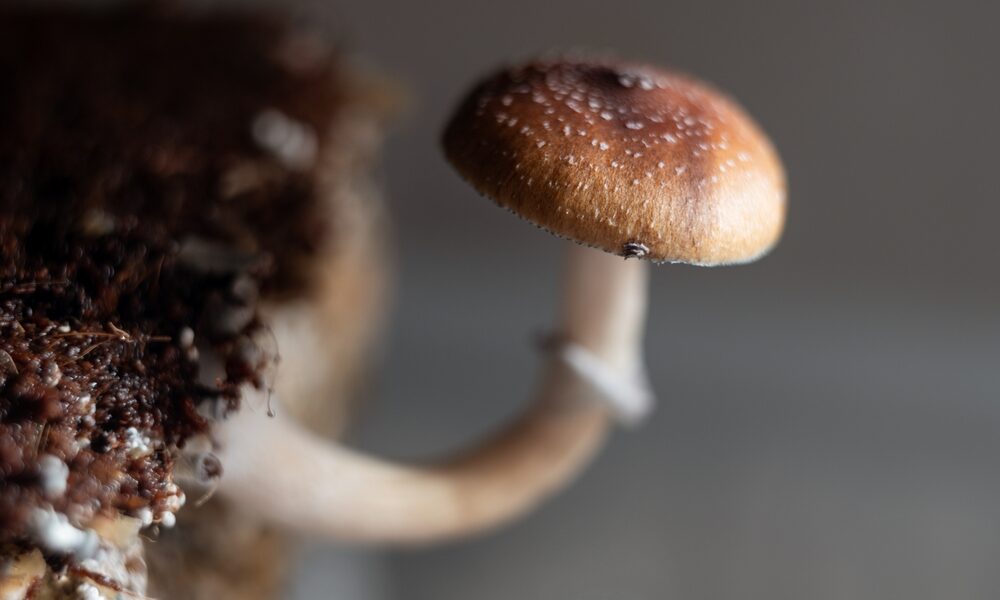
My experiences with Psilocybe semilanceata (also known as ‘liberty caps’) in the UK have provided interesting experiences when it comes to working through feelings of grief and sadness. I often find a slight mischievous or ‘cheeky’ energy with liberty caps, and this can be possibly unnerving at times, but in general, I find this energy provides a sense of the mushrooms having more agency and challenging me at certain points where other mushrooms (such as Psilocybe cubensis) might be more gentle. 

One particular experience on roughly four dried grams of liberty caps in my early 20s was rather profound, if not quite challenging at times. There felt like so much room for emotions to be experienced fully, where there was a real sense of safety in communication between myself and the mushrooms – I knew that they were here for me and wanted to provide this healing. They wanted to let me know that I didn’t need to hold onto so much anger and that it’s OK to feel the sadness of grief, even if I had a complicated relationship with my mother. It didn’t need to be a perfect or even positive relationship between us for her death to have such a big impact, and recognising the significance of the loss of my mother (despite this complicated relationship) was a big starting point in engaging more consciously with my grief. 

During this experience, the mushrooms very clearly communicated to me, “OK, you’ve had the healing – now is the time for the download!” Which I found rather astonishing to say the least…especially as I felt like I was instructed to grab a pen and paper and start writing down what was being revealed to me. I have spoken about these insights in a previous article where I mentioned the very specific extra-terrestrial nature of them, but irrespective of the content of these insights, there was a sense of a story that was greater than just my experience of grief. 

This reconnection with something greater than myself allowed the feelings connected to the grief to be softened. This isn’t to diminish the very real impact of the death of a loved one, but more so the offering of a possibility to feel connection, where there might have been an absence of feeling altogether. After any kind of grief, it can be almost impossible to feel any sense of hope or joy in life, and this is where psychedelics such as mushrooms have real power in potentially facilitating joyful experiences where we can feel a sense of reconnection to others and the world around us. 

Finding the joy in life might not necessarily repair the relationship with my mother, but it could open up the possibility for more of a dynamic relationship, where finding joy allows some sense of honouring the memory of her life. It’s what she would want for me, rather than to be consumed by a fixed view of our relationship, which could stand in the way of healing. By giving in to the anger and resentment, I’m not doing anyone a disservice other than myself, and the only way through the grieving process is by engaging in acts of joy, love, compassion, and creativity. 

In this sense, psychedelics have allowed me to explore parts of myself that feel authentic and genuine. I have been able to meet people and make friends who I consider to be close because of our shared bonds through our various psychedelic experiences. Grief in this sense might have the opportunity to become more fluid, where we can find possibility in community through shared experiences of pain and sorrow, allowing for this pain to be transmuted via potential co-creation. If we can learn anything from experiences that might have thrown us into feelings of instability, it’s that things aren’t necessarily fixed, and this gives us the opportunity to play, create, and learn from others with their different perspectives. 

Psychedelics also have the power to deepen our connection to nature, where we can improve our mental functioning when we step into these natural environments during a psychedelic experience. These kinds of connections can provide opportunities for individuals to engage with nature in a way that they might previously have been shut off from, possibly due to the mental challenges encountered when going through grief. 

In the years following the death of my mother, I wanted to shut myself off almost entirely from the outside world, other than the times I’d walk my dog. I couldn’t find any joy or pleasure in being outside, and I mostly wanted to sit around and play video games. I was stuck in a state of depression, and my health suffered a lot during my teenage years. It wasn’t until my first experiences with psychedelics at the age of 19 that I found a new sense of joy in being outside and exploring nature. I was completely in awe at how amazing the natural world was, and totally fell in love with the woodlands that surrounded my university campus in Canterbury. My psychedelic experiences provided a sense of enthusiasm and intrigue in learning more about nature, where I was able to connect with a wider story outside of myself. 

The connection to this wider story has a real sense of freedom to it – of course, what we’ve been through is important, but it shouldn’t define us. I was letting my grief define me and often just felt consumed by it until I had my first psychedelic experiences. Engaging more with these kinds of experiences might actually reshape how we see grief, where it has the potential to become a catalyst for awakening to this wider connection with the world around us. 

I recently discovered the work of author Paul Levy, who, among other insights, has spoken extensively about the Native American mythology of wetiko – an evil cannibalistic spirit which can possess humans and take over their minds, leading to greed, excess, and selfishness. This spirit turns our intrinsic creativity against humanity and manifests in various forms of destruction. Experiences of grief, whether that be on an individual or collective level, have the power to feed this spirit and allow us to be consumed by destructive energy. 

The way through this, however, is to remind ourselves of the power of creativity and engage with the world in a compassionate way. This is where I see psychedelics as providing a gift in being able to forge a new path, where creativity and compassion guide the way forward. My experiences with psychedelics have been intimately connected to my creative output as a musician, and I wouldn’t be so focused on this path had it not been for these revelatory moments, which showed me how essential creativity is to continuing life in a positive way. These experiences have provided me with new possibilities where the beauty of creation is always in juxtaposition with destruction, and through that, I am able to feel more resonance with life itself.

But what does all this mean when it comes to ‘healing’ grief? It hasn’t gone away and it never will – but does that mean it has to affect my life in the same way forever? Healing can mean something different to each individual, and the subjective nature of it means that what might work for one person doesn’t necessarily work for another. Perhaps we can think of it as ‘transcendence from suffering’, which might be an apt way to think about how we can utilise psychedelics to reconstruct a sense of meaning in our lives after the death of a loved one. 

This process is still ongoing and always evolving, but psychedelics have shown me the potential to create new relationships and find joy through creative practices. These experiences have allowed the grief to move rather than feeling paralysed by it. Through this movement, I’m able to honour the life of those who have died, rather than letting go of them.

Oli Genn-Bash | Community Blogger at Chemical Collective | linktr.ee/oligennbash

Oli is one of our community bloggers here at Chemical Collective. If you’re interested in joining our blogging team and getting paid to write about subjects you’re passionate about, please reach out to Sam via email at samwoolfe@gmail.com


share your toughts

Join the Conversation.

0 Comments
Inline Feedbacks
View all comments

Related articles

Our Products

Related Products

1V-LSD 150mcg Blotters
1V-LSD 150mcg Blotters From 22.00

(148)
1cP-LSD 100mcg Blotters
1cP-LSD 100mcg Blotters From 18.00

(139)
Tryptamine Mix and Match Pack (4 x 0.1g)
Tryptamine Mix and Match Pack (4 x 0.1g) 65.00
(1)
1V-LSD 10mcg Micro Pellets
1V-LSD 10mcg Micro Pellets From 15.00
(45)
1V-LSD 225mcg Art Design Blotters
1V-LSD 225mcg Art Design Blotters From 35.00
(65)
1S-LSD 150mcg Blotters
1S-LSD 150mcg Blotters From 29.00
(21)
1V-LSD 225mcg Pellets
1V-LSD 225mcg Pellets From 35.00
(26)
1cP-LSD 10mcg Micro Pellets
1cP-LSD 10mcg Micro Pellets From 15.00
(23)
1D-LSD 225mcg Pellets (1T-LSD)
1D-LSD 225mcg Pellets (1T-LSD) From 42.00
(13)
5-MeO-DMT Freebase
5-MeO-DMT Freebase From 23.95
(36)
O-PCE HCL
O-PCE HCL From 17.50
(25)
1cP-LSD 20mcg Micro Blotters
1cP-LSD 20mcg Micro Blotters From 18.00
(29)
4-HO-MET Powder
4-HO-MET Powder From 19.50
(27)
1cP-LSD 150mcg Pellets
1cP-LSD 150mcg Pellets From 25.00
(13)
4-AcO-MET Fumarate
4-AcO-MET Fumarate From 19.50
(12)
rewards-icon
popup-logo

Reward program

popup-close
  • Earn
  • Affiliates